Food Insecurity in Canada: New Public Opinion Survey Shows Growing Concern and Support for Action
Increasing public awareness of and support for policies to reduce food insecurity in Canada has been one of the goals the Maple Leaf Centre for Food Security has been working towards. For the past six years, the Centre has partnered with David Herle to conduct a nationally representative survey to better understand Canadians’ perspectives on social issues, with a focus on food insecurity and related policy issues.
Our 2026 results are based on an online survey of 3,223 Canadians, conducted in English and French from June 10-21, 2026, with additional samples collected in Manitoba, Newfoundland and Labrador, and New Brunswick. Results were weighted by gender, age, region, and median household income. A probability sample of this size would have a margin of error of approximately 2 percentage points.
If you would like to use the data, please cite “The Maple Leaf Centre for Food Security and David Herle (June 10-21, 2026). Public insights on food insecurity. www.feedopportunity.com”.
The rate of food insecurity has continued to climb.
In 2021, 70% of Canadians said they had “never” experienced food insecurity. Today, it’s just 47%, a 5-point decline from last year. 1 in 3 Canadians say they are currently experiencing food insecurity, or they have in the past 12 months.
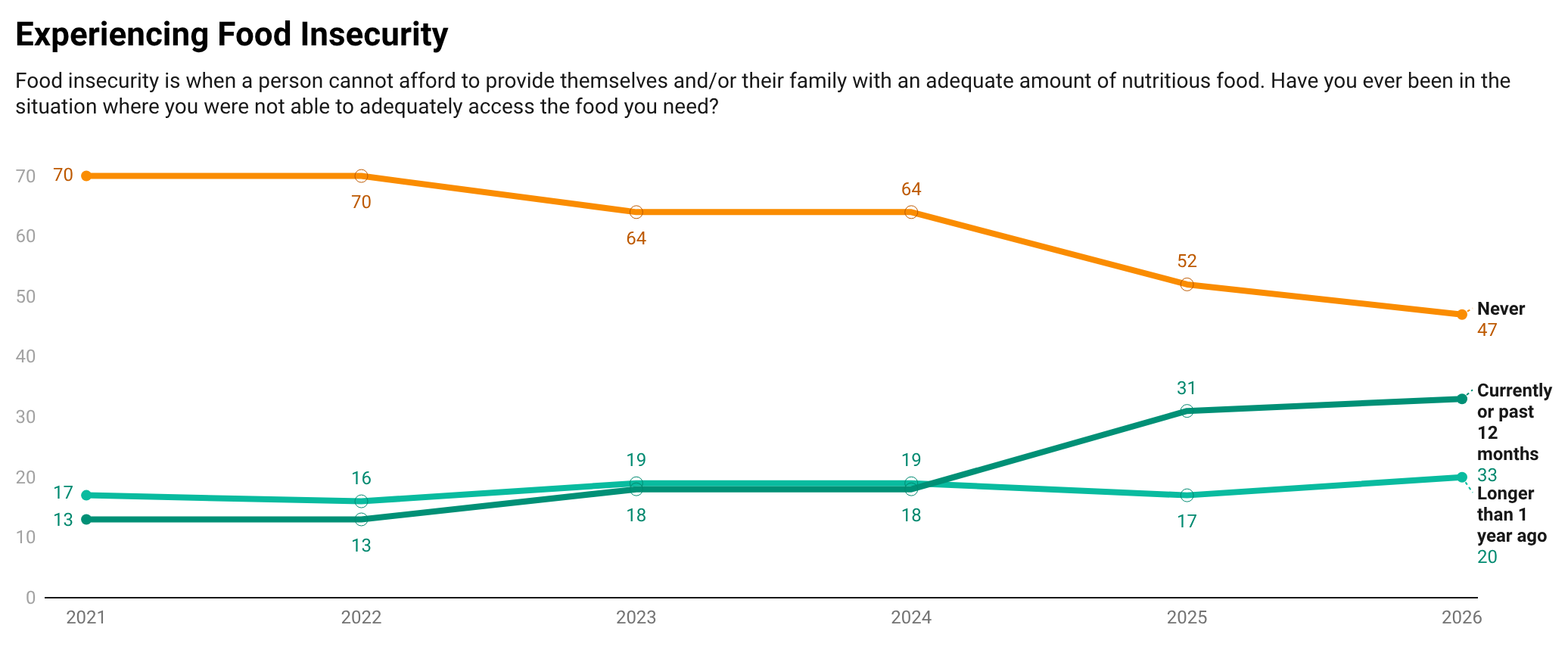
The rate of long-term food insecurity has increased sharply since last year.
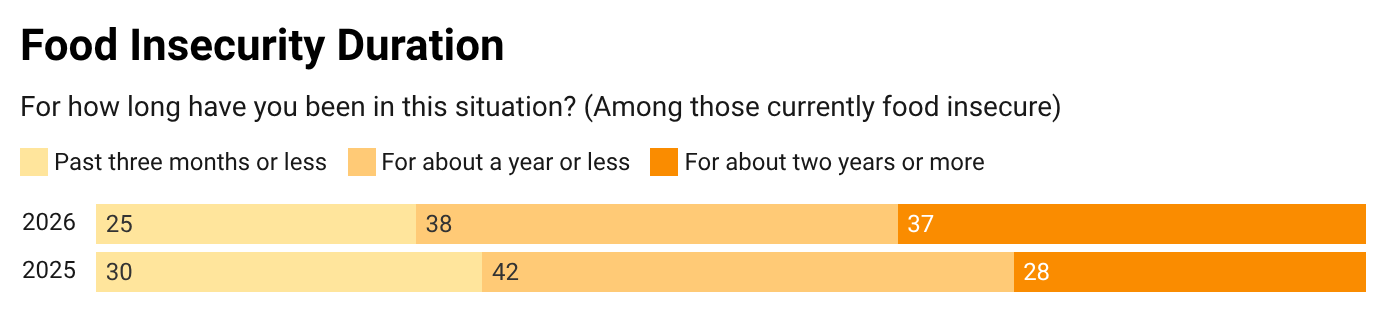
Food insecurity is also becoming more persistent for those experiencing it. 37% of food insecure Canadians reported being in this situation for two years or more, up 9-points since last year.
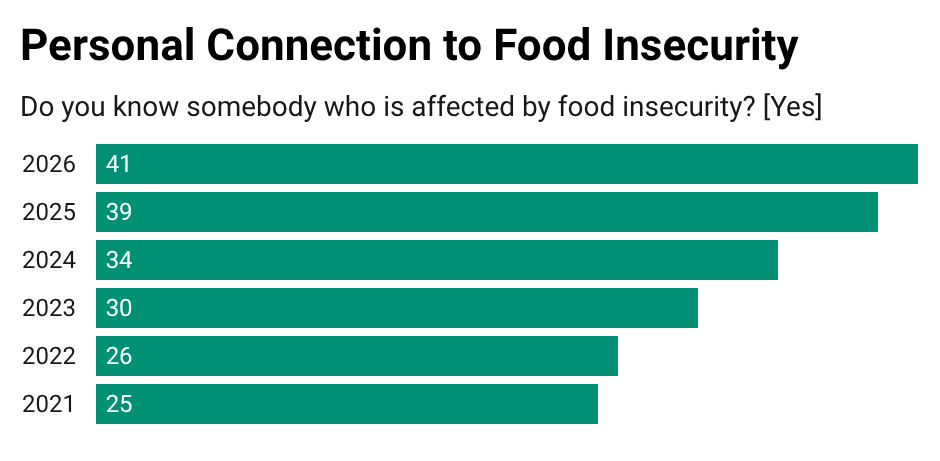
More Canadians have a personal connection to food security.
Today, 41% of Canadians know somebody affected by food insecurity, up 16 points compared to 2021.
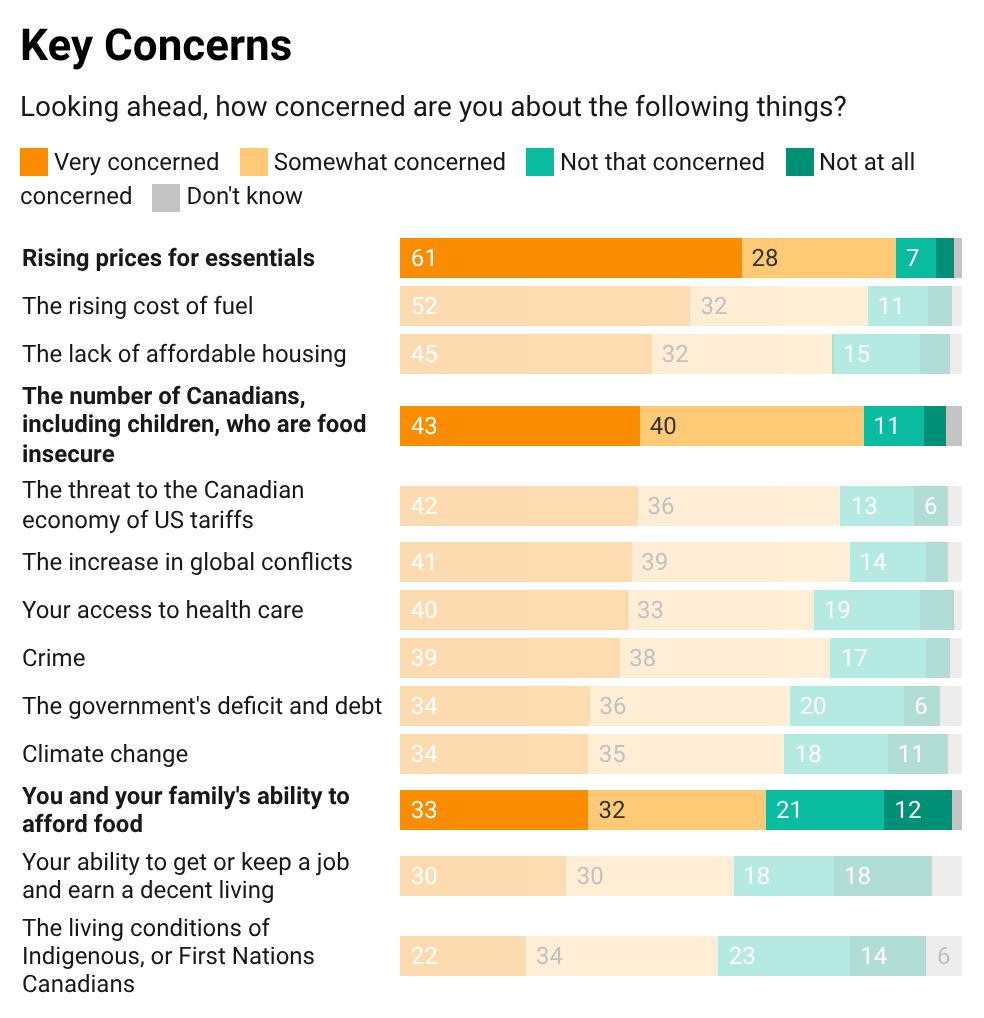
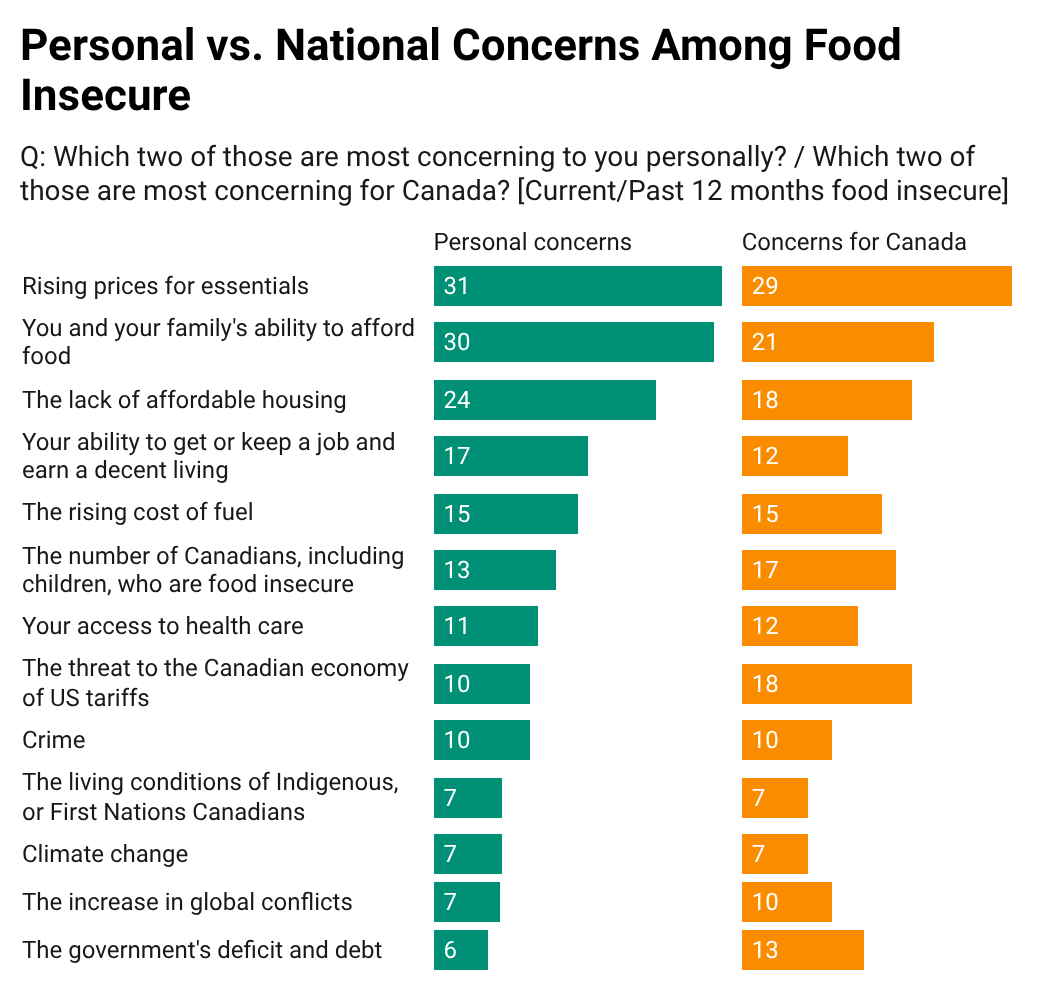
Canadians’ top concerns relate to the increasing cost of living, particularly the cost of food.
These concerns include the rising price of essentials, the cost of fuel, the lack of affordable housing, and the number of Canadians, including children, experiencing food insecurity. While concern about one’s own family’s ability to afford food ranks lower, it remains an issue for approximately two-thirds of Canadians. There’s a broad consensus that food insecurity is an issue, even if someone isn’t personally afflicted.
Other top issues include US tariffs, global conflicts, healthcare, and crime.
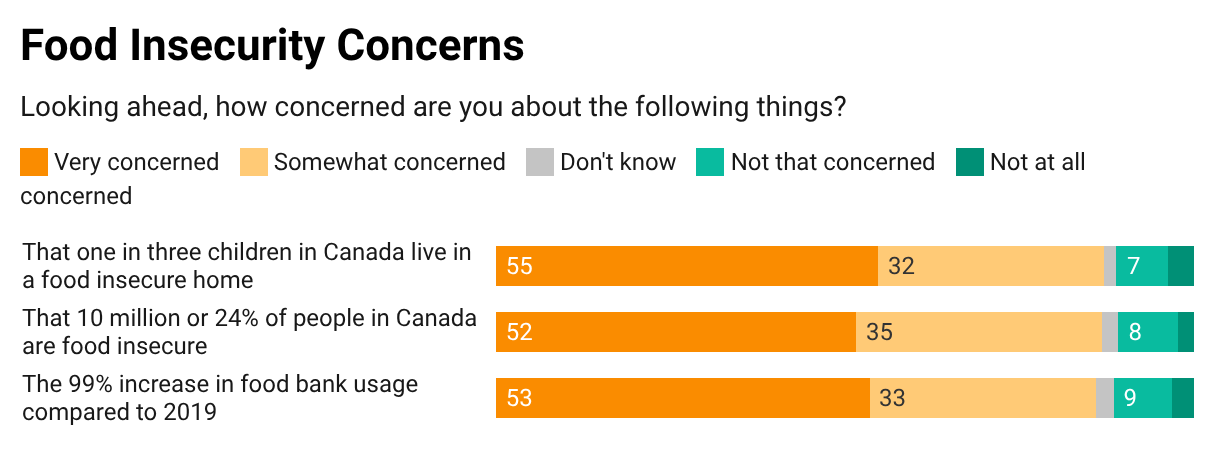
Canadians find the current state of food insecurity in Canada to be very concerning.
Nearly 9 in 10 Canadians express concerned that 1 in 3 children live in a food insecure home, that 10 million people are food insecure, and that food bank usage is up 99% since 2019.
Cost-of-living pressures shape personal and national concerns.
Among those experiencing food insecurity, affordability pressures dominate both personal and national concerns.
Rising prices for essentials are the leading concerns, followed closely by families’ ability to afford food and the lack of affordable housing. These same affordability pressures also rank prominently when respondents consider the most pressing concerns facing Canada.
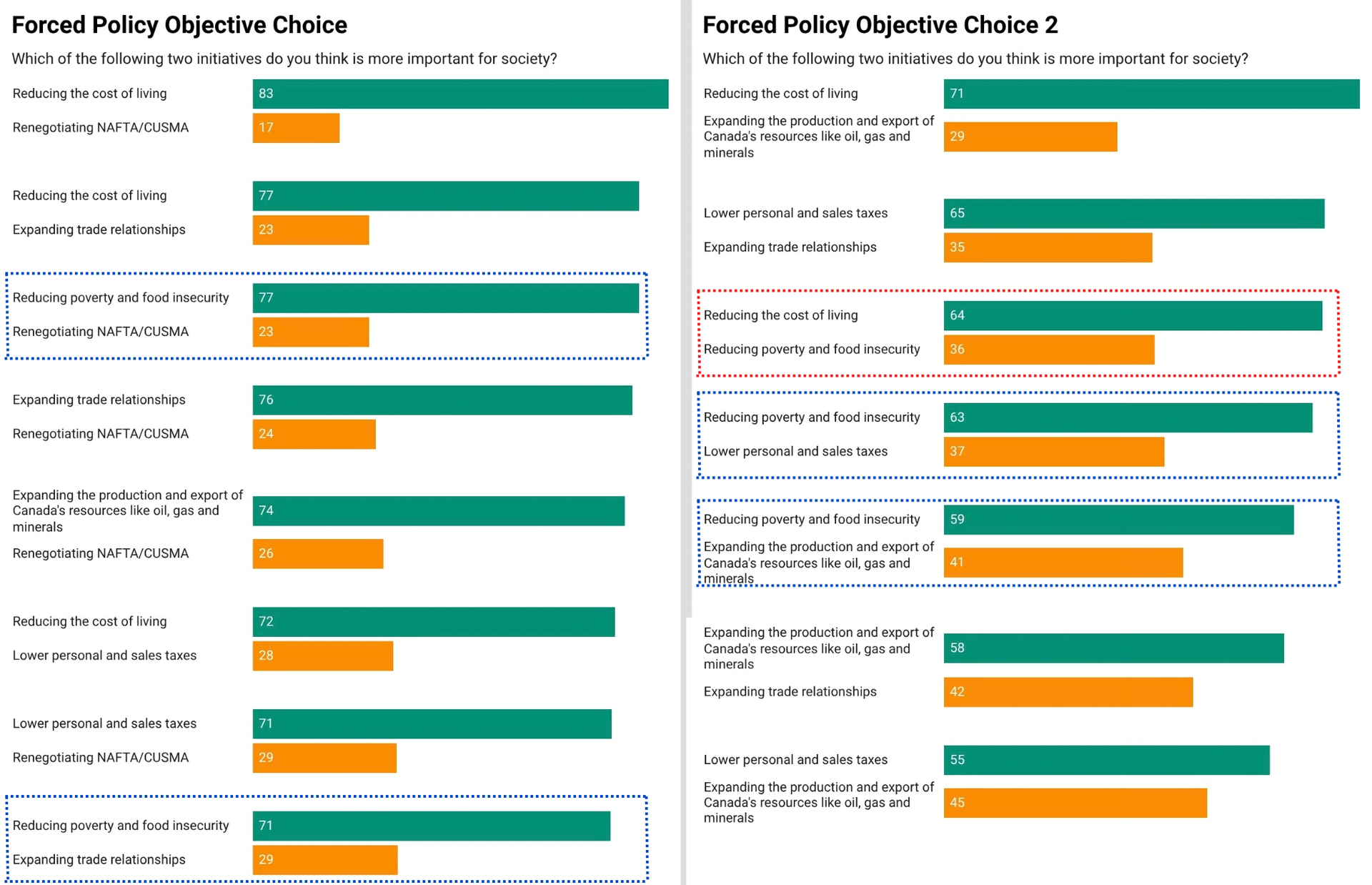
Reducing poverty and food insecurity remains a strong priority.
When asked to choose between competing policy objectives, Canadians consistently prioritize reducing poverty and food insecurity over several other policy areas.
Reducing poverty and food insecurity is preferred over trade, tax, and resource-related priorities. The exception is reducing the cost of living, which 64% prioritize when the two are compared.
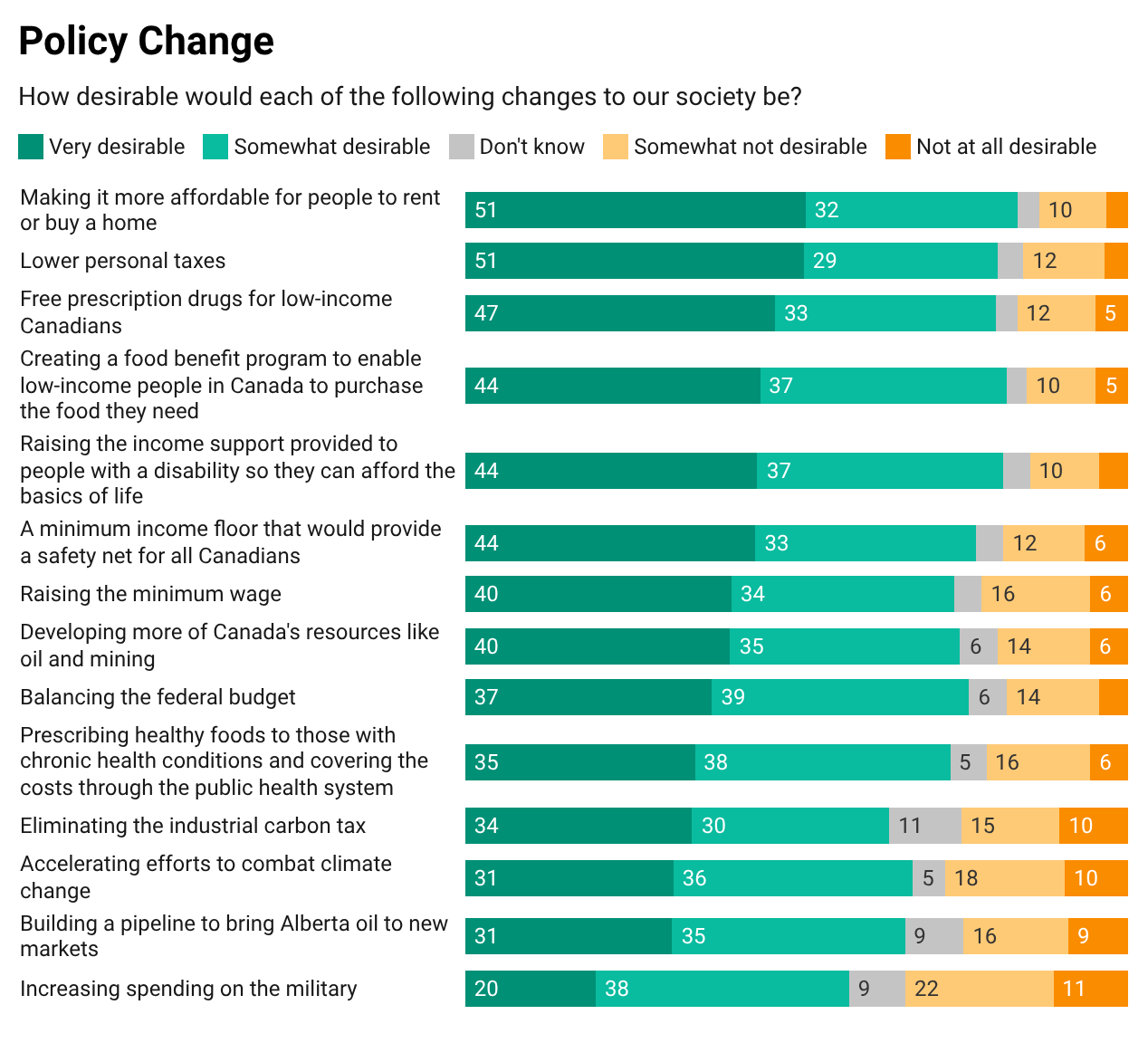
Canadians favour measures that address affordability.
Measures to improve affordability rank among the most desired policy changes.
Making it more affordable to rent or buy a home and lowering personal taxes received the highest levels of support among th emeasures surveyed. A food benefit program for people with low incomes also received broad support, with more than 4 in 5 Canadians describing it as desirable.
Canadians strongly believe in government intervention to address food insecurity.
Canadians expressed broad support for government action to address food insecurity.
86% of Canadians agree that the government should ensure that no child in Canada goes hungry. 83% think people going hungry in Canada goes against our Canadian values. 80% also agree that Canada should establish a target to reduce food insecurity by 50% by 2030.
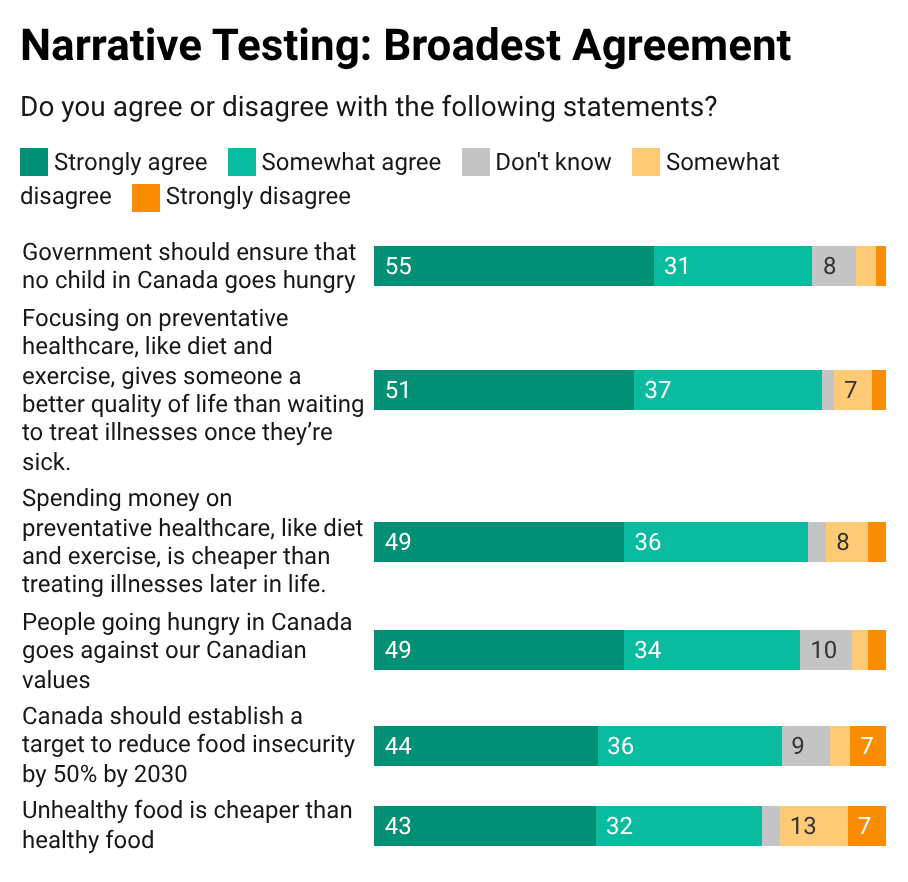
These results reinforce the importance Canadians place on government action to address poverty and food insecurity. The Centre remains committed to working with governments at all levels to strengthen and advance effective policies and programs that improve food security and reduce poverty across Canada.
October 2, 2026